The Chance to Vote FOR Someone

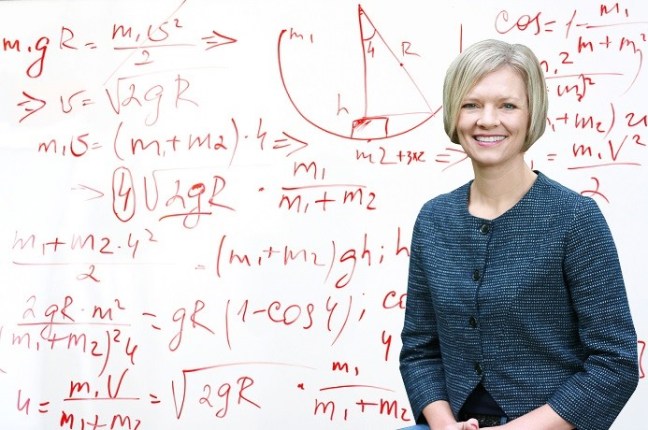
A photoshop of Jonina and a whiteboard

The next British Columbia provincial election is happening in May. This election is particularly interesting for me because one of my friends, Jonina Campbell, is the Green Party’s candidate to be the MLA for New Westminster.  On Saturday, I attended a dinner/fundraiser she put on. It was the first time I’ve attended a political event in the 20 years, and I was impressed.

My connection to Jonina

I first met Jonina in 1998 when I joined her ultimate team, Apocalypse Cow.  That team played a lot of ultimate, but did just as much socializing.  Something like five marriages resulted from that team, including mine.

Members of Apocalypse Cow even tended to live in similar areas. At one point, Jonina and her husband actually lived in the same apartment building as us. In a way, our lifestyle was sort of like Friends, but with a larger, less sexy cast, fewer coffee shops, and a geekier vibe.

We used to visit Jonina and her husband every Wednesday night to watch The West Wing, probably my favorite American TV show. When the World Trade Center fell, I saw it from Jonina’s living room and heard Jonina’s horrified gasp. My wife actually went into labour at Jonina’s house the night before my son was born.

Will Jonina be a good MLA?

Thus, I know Jonina fairly well. She’s bright and thoughtful, but almost ridiculously extroverted and charming. She has integrity—she’s clearly not in politics for her own ego or enrichment, but rather because she wants to effect positive change in the world. She has empathy and compassion, but is grounded enough to make the hard decisions when necessary. And she’s insanely energetic.

When I think about the people I know well, there’s actually many I wouldn’t vote for simply because they wouldn’t be that good at the job, would have terrible ideas, or would be in politics for the wrong reasons.

But I consider Jonina to be an ideal MLA. Her combination of honesty, brains, compassion, and energy is really rare, and I think it will result in her being extremely effective as an MLA. It’s fascinating listening to her perspectives on education, formed based on her experiences as a parent, a teacher, and the Chair of the New Westminster school board.

“The chance to vote for someone.”

That said, I was initially skeptical when I found out she was running for the Green Party, simply because I think BC will benefit from Jonina sitting as an MLA, but—in its entire history—the Green Party has only won one seat in the Legislature. So, running as a Green Party candidate seemed like a hard path to becoming an MLA.

But the fundraiser this weekend convinced me, for several reasons. Andrew Weaver, the party leader spoke, and he raised a very good point—the Greens actually give the electorate the chance to vote for someone, rather than against someone.

This simple statement resonated with me, because I feel like provincially, my entire adult life, I have been voting against parties. Christy Clark’s Liberals are actually conservatives. To me, they seem to be corrupt, pandering to their biggest donors, real estate developers. They don’t seem to care about public education and are actually underfunding schools to the extent that students take days off because the government isn’t providing enough money to keep the schools open. They don’t seem to care about sustainability or the long term future of BC, but rather making money for their friends. They only started pretending to care about affordable housing when it became the issue most important to voters, ahead of even the economy. So, I’m not a fan of the Liberals.

What about the other guys?

Thus, the NDP has frequently been my “not the Liberals” choice, but only because they seem to be the lesser of two evils. In the last election, they didn’t focus on communicating their plans. Instead, they said “we’re not the Liberals” so much that I’m pretty sure they were considering changing their name to the NTL. That’s not to say there isn’t something to that argument. They might not fund public education, but at least they wouldn’t view it the way Clark seems to, as nothing but a cost center. They probably wouldn’t put real estate developers ahead of their constituents to the extent that the Liberals do. But voting for the NTL party is distasteful.

What’s more, the NDP seem as beholden to their union donors as the Liberals are to their real estate developers. I’m not only scared of the NDP crashing the economy but also making extreme pro-business decisions to reassure people who are concerned about them crashing the economy. (In fact, in this respect, I think the NDP has an insurmountable brand problem.) So, maybe I’d vote for the NDP, but not because they convinced me that they were the right party to lead.

The appeal of the Greens

The Green Party, in contrast, seems far less ideologically-based than either the Liberals or NDP. I expected it to be the party of hippies, but it seems to actually be the party of evidence-based reasoning. Weaver is a climatologist and several of the party’s candidates have Ph.Ds, and the crowd at the event seemed bright and thoughtful. I had conversations at my table about sustainable logging practices, the statistical analysis of demographic data, the tech environment in BC versus Silicon Valley, and the long-term consequences of self-driving cars.

If you look at the Green Party’s policies, you’ll see that they’re focused not on what ideology demands, but what actually works—what the evidence suggests results in happy people and successful societies. Thus, they’re looking at community building, preventative medicine, education, integrated healthcare, and pushing decision making down into communities. Sure, there is some ideological stuff (e.g. opposing trophy hunting), but mostly the Green Party seems to be about practical evidence-based solutions that work over the long term.

My bottom line

Thus, Andrew Weaver is right—the Green Party is a party that you can actually get excited about. Politics has been becoming increasingly polarized, with people fighting about whether our society should be based on left or right ideology. In contrast, the Green Party seems to be saying, “Who care’s whether something is left or right? The only questions that matter are does it work, and is it sustainable?”

To me, that’s a refreshing change. It cuts to the heart of the issue, and provides an alternative to the horrible “if you like it, I must oppose it” war that politics is mired in today.

The Normalization of Biometric Data Collection

Biometric data gathering is an advance on using a star.

Every grade seven student in my children’s school does a two-week Quebec exchange and hosts a student from Quebec in return. This is my kid’s year, so, in preparation for hosting, I authorized a criminal records check. I’ve done this before—it’s pretty standard for activities like coaching kids.

However, this time was different. Apparently, the rules have changed, and now they want the process to include a fingerprint check, for me and other fathers, because “my name and/or gender and/or birthday” matches someone with a pardoned or suspended sexual offence. I’ve never been accused of any criminal act, let alone arrested. But to me, this sort of biometric collection is problematic.

My problem with their reasoning

The biggest is with this check is that it normalizes the collection of biometric data. The “and/or” in the above statement is disturbing, because it justifies the collection of data from pretty well everyone (though I imagine they’re mostly doing it for men). I mean, one way that clause can be interpreted is that someone matching my gender has offended.  That would mean they could request fingerprints from anyone, since at least one male and one female in the country is guilty of a sexual offence.

Suppose, on the other hand, the match is on gender and birthday. The letter actually suggests this might be the case—it says that criminals might change their name (but not their birthday?) to circumvent a criminal records check.

Is that criteria any less broad?

Not much. In 1997-1998, between the adult and youth courts, there were about 4,400 convictions for sexual offences, or about 2,200 a year. Suppose we assume a third of these are repeat offenders, leaving about 1,500 distinct offenders each year.  If you assume the typical sexual offender is between 10 and 60 years (borne out by the data here), then we’re talking about a 50 year time range, a period with 75,000 unique convicted sexual offenders and with about 18,262 potential birth dates.

The math is hard, but with these numbers, I imagine over 80%-90% of potential birth dates have at least one sexual offender. In other words, if the government is identifying people by “gender and birth date”, their filter is almost no more limiting than simply identifying people by gender.

So, what this letter is actually saying is, “You are male. Therefore we will fingerprint you to make sure you’re not a sexual offender.” I don’t think that’s cool.

Who cares?

The typical counter arguments to my point of view are, “if you’re not a criminal, why would you care? Wouldn’t you want the people your kids are visiting to be fingerprinted?”

If 40% of the population were sexual predators, I might say “yes”.  But if you compare the 75,000 sexual offenders with the 30.25 million population of Canada in 1998, we’re talking about 0.025% of the population. The probability of my kid being abused by someone who would be caught by this sort of check is tiny.

Thus, my answer is “no”, because I think the normalization of biometric collection (i.e. saying “the government should be able to uniquely identify every individual simply by how they look”) is worse than the problem it’s trying to address.

The primary issue with the collection of biometric identification data the government of today isn’t necessarily the government of tomorrow. Though I might believe that the government today is trustworthy to collect my biometric data, that doesn’t mean the government in 30 years will be.

Often, when governments decide to do nasty things like persecute a sub-group or commit genocide, they start by putting considerable effort toward identifying the individuals that they see as undesirables. Then, they pass laws to make the lives of those undesirables uncomfortable. The easier it is for them to identify the undesirables, the easier it is to persecute them, and the more difficult it is for the undesirables to have any hope of resisting them. And, of course, resistance would actually be illegal, since the government is the one making the laws.

Some history

Take, for example, the government that was democratically-elected in Germany in 1932. In 1935, they passed the Nuremberg Laws to deny Jews the right to German citizenship (and therefore their ability to vote, own businesses, or work in government-regulated professions like teaching) and made it illegal for Jews and Germans to marry.  They also seized money Jews stored in banks and took their assets if they tried to emigrate. Any Jew who tried to resist these laws was, of course, a criminal.

One problem for the German government was identifying who was actually Jewish. Thus, they passed laws making it illegal for Jews to change their names. They also required Jews to hold Jewish identification cards with a copy of their fingerprints. Finally, Jews were required to wear a Star of David on their clothing, and buildings where a Jew was present were required to hang a similar star on the front door. It was very important for the government to easily be able to identify the Jews, since without that, it would be much harder for them to enact their long-term plans.

How much easier would it have been for that government to pursue that path if it already possessed a ready-made database of the fingerprints of everyone in the country? How happy would they have been if, instead of just fingerprints, they had biometric data including facial measurements on everyone, and were able to feed every camera in the country into computers that could pinpoint the location of anyone they wanted based on how they look? They would have been delighted, I imagine.

It would be almost impossible for any undesirable to have any hope of escaping persecution. (Well, maybe I should use the word “prosecution”, since we’re talking about Jews violating the laws enacted by the government. I supposed both words apply in such situations.)

My conclusion

Thus, I think the collection of biometric data is terrible. It makes it easy for bad governments to do horrible things to the people it doesn’t like, and makes it almost impossible for the persecuted to defend themselves, let alone fight back.

Thus, my problem with this casual fingerprinting is that it’s normalizing the collection of biometric data, basically saying, “the government deserves to be able to uniquely identify you in order for you to participate in normal, day-to-day events in our society.”  Taking fingerprints today is a step toward taking facial measurements tomorrow.

I don’t want this to be the norm. I don’t want it to be easy for a government to identify the portion of the population they want to persecute. I want it to be really hard, so that the persecuted individuals have time to fight back or run away, so that the electorate has enough time to see its mistake and correct it. If the government has good biometric data, collected over the course of years, nobody will have that time.

What I’m doing

Thus, I’m not submitting my fingerprints. Instead, I’ll be booted out of the house for the duration of the exchange student’s stay. After all, being assumed to be a sexual predator in this sort of scenario is one of the costs of being male. But at least I can take solace in the fact that the world still favors my gender overall.

The Most Important Properties of a Video Game

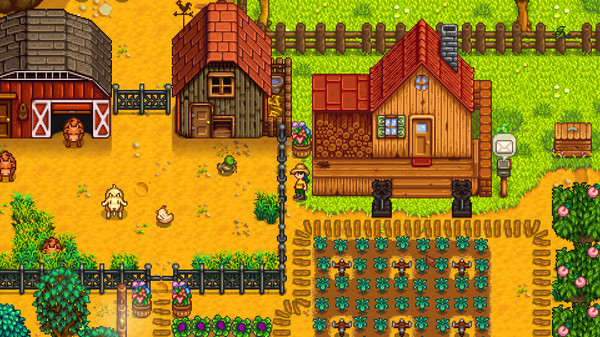
An example of a farm in Stardew Valley

Recently, I’ve been playing Stardew Valley.  Like Minecraft, this game is unusual in that it was created not by the typical team of programmers, but rather by a single individual. Four years ago, the creator of Stardew Valley graduated from college, but couldn’t find a programming job. So, instead of working at Starbucks, he decided to live off the kindness of his girlfriend and create his own game to sell on Steam for a sub-$20 price.

The outcome for him must have surpassed his wildest expectations. Since the game came out last year, estimates are that it’s made over $40 million.  That would be a so-so result for a company spending $15 million just to create the game, but remember, this is one guy, not a gaming company. He doesn’t need to pay a portion of that money to anyone else. It all goes to him.  (Which results in my wife asking me, “Hey, haven’t you spent about 4 years writing books? How’s that going?”)

It’s noteworthy that this one fellow created everything in the game—the design, the code, the graphics, and even the music. The result is a farming game that looks like something created in the late 1980s. As you can see above, the graphics are vivid and bright, but pixilated, like the game was designed for a bulky 640×480 CRT monitor. In a way, Stardew Valley proves that the thing that matters in games isn’t the flashy graphics that are used to sell every new video game console. Rather it’s the game play.

So the success of Stardew Valley has got me thinking about what makes a game compelling.  A few things immediately spring to mind.

Small victories

In general, I think for a game to be compelling initially, it has to have a lot of small and medium victories, akin to a slot machine giving out a lot of small payouts. In Tetris, the small victories are whenever you finish a line or a level. In Candy Crush, they are when you create or use a special candy, or when you finish a level.  In Call of Duty, it’s when you shoot someone or win a game.  In Starcraft, it’s when you build a particular building or unlock a new capability.  In Civilization, it’s researching a particular technology, building a wonder, or capturing a city.

These small victories both give player a feeling of success, and—because they’re small—encourage the player to keep playing another few minutes so they can achieve the next small victory.

Drudgery eliminated by “cool” expanded abilities

The second thing that makes a game appealing is when each victory gives the player expanded abilities, often eliminating annoyances that are artificially built into the game itself. For instance, in most farming games, you need to water crops or wait for the crops to grow. There’s no programmatic “need” that requires the player to click all over the screen to water their beets or have a real-time delay between when the pumpkins are planted and when they grow.  However, this artificial constraint ensures that a reward for a small victory will have significant value to the player. If the reward is a automatic sprinkler, so the player doesn’t have to waste time walking all over the screen to water plants with a watering can, then that sprinkler has real value in eliminating the artificial drudgery of manual watering.

The interesting thing about this sort of reward is that you wouldn’t think that building drudgery into a game is a good idea. Why would someone want to play a game if it’s drudgery? However, in this case it works, because that drudgery provides the player with the incentive to look for rewards that will eliminate their suffering. (Yes, they could just stop playing the game, but if they only need a small victory to eliminate that suffering, why wouldn’t they do that instead? The sunk costs of quitting would be high.)

Requiring resource allocation decisions (that often don’t matter)

Finally, most good games require the constant allocation of resources, forcing the player to prioritize one path over the other. At the same time, often, these decisions don’t matter that much, in the sense that the player can often “win” by multiple paths, and often can’t “lose” by choosing the wrong path. Instead, the winning conditions will be different and the results will look different (e.g. lots of cows instead of wheat in farming games, a big army instead of a bunch of museums in Civilization).  But, when it comes down to it, you’re allocating resources to solve small problems, and, through solving those problems, you’ll hit a victory almost regardless of how you allocate those resources because almost all reasonable paths lead to victory.

Of course, that isn’t true for all games. Tetris has no equivalent to a resourcing decision. In Civilization, if you completely ignore your army, Attila, Shaka, or Genghis will raze all your cities and you will lose. But it often seems to be true—even in Civilization, a minimal army is often sufficient to keep others at bay long enough to loot the archeological treasures of other civilizations.

And, though it seems strange, “resourcing decisions that don’t matter” is a feature, not a bug. It allows the player to focus on the aspects of the game that they like, ignore the rest, and still end up victorious. In effect, the player is customizing their gaming experience in favor of the type of game play they prefer. Some people like to be snipers, some people like the big explosions resulting from rockets and grenades, and some people just like to shoot people with a big gun. Call of Duty is open to all these types of game play.

The bottom line

To me, in combination these features make games compelling, leading to the “one more turn” aspect that keeps gamers playing until 3:00 AM on a weeknight. It would be interesting compiling a list of key features, and then deliberately designing games around those principles. (In fact, I imagine thoughtful gaming companies are already doing this.)

Should Becoming a Millionaire Be the Goal?

Financial tradeoffs in life

In my last blog, I talked about how easy it is to become a millionaire through compounding. If you believe that wealth is an end unto itself, then that is a perfectly worthwhile goal. Most people make money by selling stuff to other people, so almost all advertising is focused on telling the audience that they don’t have enough, that they need to keep accumulating and buying. The “become a millionaire” idea fits nicely into that high-consuming lifestyle.

However, studies seem to indicate that in itself, wealth doesn’t provide that much happiness. That’s not to say that a rich person isn’t on average happier than someone living in a cockroach-infested apartment, but rather than the difference in their degree of happiness usually  isn’t that large.

We also know that happiness tends to result from experiences and friends rather than a big house or a nice car. Thus, a smart strategy, if you want to lead a happy life, might be to focus less on accumulating stuff, and more on creating experiences with friends.  The problem with that idea, however, is that work takes up so much time every week, getting in the way of vacationing and playing with friends. Darn.

One possible answer

One solution to this conundrum is, instead of focusing on building wealth, focus on becoming financially independent. One the surface, these two things seem similar, but they really aren’t.

Having wealth means you have a lot of money relative to other people. Financial independence means that you can live the lifestyle you want without working.

This distinction has some interesting implications. If you’re wealthy, but spend a huge amount every year, you might not actually be financially independent. In contrast, if you have modest savings, but don’t spend much at all, you might be financially independent. Thus, for financial independence, spending matters as much as savings.

This has some interesting implications when you combine it with the observations that happiness is derived from experiences and work is getting in the way of having those experiences. It means that many people may increase their happiness by cutting expenses and increasing savings to reach financial independence early, so as to have time to collect experiences.

Financial independence through extreme savings

In another blog, I discussed the idea of “safe withdrawal rates”, the amount of money you have in order to be financially independent today. Research says that, if you can survive on about 4% of your savings, you are financially independent—you can retire today, and your savings will almost certainly last you the rest of your life (even taking into account inflation). Personally, I prefer a number between 2.5%-3.5% just to be conservative, but 4% is what the experts say.

This leads to some interesting savings math. Like, let’s assume you start with nothing, but you’re going to invest part of your salary at a return of 10%.  How many years do you have to work before you are financially independent, assuming a 3.5% safe withdrawal rate?

The answer depends only on how much of your salary you are saving. If you do the traditional 10% rate that I mentioned in my previous blog, it’ll take you 34 years. But if you double your savings rate to 20%, it’ll take you only 26 years.

But suppose you get extreme with your savings. Then you can become financially independent really quickly. In my last blog, I talked about how, in university, I was spending about $9,000 a year, but then I got a job where I was making $57,000 a year, or about $47,000 after tax. Suppose I had kept up the same expenses I had in university, and saved the rest, about 80% of my income. My time to financial independence? Roughly six years.

Time until financial independence

The key is that when you increase your savings rate, you aren’t only increasing the amount you’re investing. You’re also decreasing your spending rate, which means your nest egg doesn’t needed to be nearly as large for you to be financially independent.

In other words, if I were saving 80% of my $57,000 salary, I would only need an income of $9,000 a year to be financially independent. At a 3.5% safe withdrawal rate, I’d only need $257K in assets to generate that income. If I were saving 10%, that would mean I was spending about $50,000. I’d need $1.4M in assets to generate that $50,000 income.

With these assumptions, you can create a pretty table that shows how many years you have to work before you reach financial independence at different savings rates, assuming a 3.5% safe withdrawal rate.

Savings Rate

7% Rate of Return 10% Rate of Return

10%

43 years

34 years

20%

32 years 26 years

30%

25 years 21 years

40%

20 years 17 years
50% 16 years

14 years

60% 12 years

11 years

70% 9 years

8 years

80% 6 years

6 years

The bottom line

This approach certainly isn’t for everyone, but, if you value your time far more than you’d value a nice car or a huge house, then it might be a good option for you. If the happiness studies are correct, I suspect most people could live a happier life by taking this sort of approach instead of working for long hours for years in order to maximize their ability to spend.

The Easiest Way to Get To $1 Million

Movies have been made about it

For a long time, a million dollars has had a sort of mysticism about it, like if you had a million dollars you’d be rich (heck, it’s even the lyrics to a song). However, a million dollars is actually easily within reach of the typical family. How?  Through time and compounding.

The basic idea

The biggest financial rule that most people underestimate is the power of compounding. Compounding is the idea that, if you invest over the long term, you don’t simply make money of your initial investment. You also make it off the income that you earn on that investment.

For instance, if you invest $100 and make a 10% return, you’ll have $110 the next year. But that second year investing, you won’t simply have $100 to invest, you’ll have $110. And if you get another 10% return, you’ll have $121.

That might seem obvious, but what’s really happening here is exponential growth, and over time, exponential growth becomes huge. And people generally don’t have a good intuitive feel for just how much exponential growth explodes. For instance, if you kept investing this way, do you have a good feel for how much money you’d have in 60 years?  Just guess….

$30,448. Without invest any other money, your $100 has become over $30k.

Now how about you don’t just start with $100, but start contributing more often?

Making the million

So instead, let’s suppose you have the median household income in the USA, $57,616, and you decide to save 10% of your income every year, getting a 10% return. After 60 years, you’ll end up with about $25.6 Million.

Now, there are a bunch of obvious flaws in this calculation, and they matter a lot because, when you do compounding calculations, seemingly minor changes to the rate of return or the timeframe have huge effects on the results.

So, the 60 year timeframe is pretty lousy. What’s the point in having $25 million when you’re 80 and you’re physically far less capable, not to mention only having a decade or two of life ahead of you? So, let’s cut this back to 40 years, so, if you start this game at 20 or 25 years old, we’re actually calculating your net worth at your retirement age.

And also let’s cut back the 10% to 7%. People do get 10% sometimes (some people like Warren Buffett have made 20%+ for decades), but pretty well anyone can make 7% in an index fund.

With those numbers, you break a million on year 38 and by year 40, you’ll have about $1.23 million.

The other factors to consider are taxes and inflation. Taxes aren’t that big a problem, since index funds tend to be very tax-efficient. Thus, taxes won’t subtract from your returns significantly.

Inflation, however, will. There’s no great way to deal with it, except saying that being a millionaire in 40 years will still be much better than being broke, even if being a millionaire won’t be what it is today.  Plus, all these numbers assume that your income is fixed at today’s median income, when really, it’ll likely be growing at inflation or faster. So, you’ll be able to invest larger sums as the years go by, counteracting inflation slightly.

How to do it?

The other big problem with this approach is that nobody can save 10% of their income because everyone has bills to pay. My answer to this is that’s largely just an excuse. Do you really believe that nobody lives on a salary that’s 10% less than yours?  If that’s true, you really aren’t making much money and should seriously look at upgrading your skills so you can get a better paying job.

In university in 1990, I lived on about $8,000-9,000 per year, about a quarter of which was university-related expenses like tuition and textbooks. After school, my salary jumped to $57,000 per year, and I ended up spending much of that because I had the money to spend. But I don’t think my lifestyle was significantly better than when I was at school, nor was I significantly happier because of that extra income.  It’s just that money was there, so it was spent.

The way around the issue of your lifestyle expanding to take up all the income available is through a “pay yourself first” strategy. That is, have the money for investing automatically deducted from your paycheck before you receive it.  If you’re making $2,000 per month, then deduct $200 for investment, and only have $1,800 actually reach your bank account. Live like that $1800 is your actual income and you’ll never miss the $200 that was deducted.

This strategy is the key to accumulating wealth for most people who aren’t entrepreneurs. It’s simple, reliable, and doesn’t significantly hurt your lifestyle. If you never see the money, you won’t be able to spend it. This was the exact strategy that I used initially.

The bottom line

Today, there is actually a reliable set of rules that you can put in place that will enable you to become a millionaire. It doesn’t take much effort or even much impulse control. All you really need is an afternoon or two to set up all the paycheck deductions, and then just wait. You’ll end up a millionaire.

How Long Does It Take To Write A Book?

A Painting of Russian writer Evgeny Chirikov

About a week ago, I finished the first draft of my third novel, so now is a convenient time to look at how long it takes me to write a novel. This statistic is actually quite important, because if you look at self-publishing, it seems like the novelists who are most successful are the ones who are able to write the most books in the least time. It’s unclear to me where quality factors in, but I suspect it’s of secondary importance to productivity.

So, how long?

I measure my time in hours, and I’ve got four main phases, First Draft, Editing, Final Editing, and Formatting. First Draft is simply the length of time creating the first draft, including outlining. After that, comes the biggest phase, Developmental Editing, where I do my own editing and send it out to beta readers and make changes based on their feedback. Once I’m happy with the manuscript, I send it to my editor and do Copy Editing based on their feedback. Finally, I need to do Formatting to create covers and make it so that both the print version and the ebook version look sensible.


Book 1

Book 2

Book 3

First Draft

225 (29%)

294 (39%)

190

Develop. Editing

428 (55%)

391 (52%)

 
Copy Editing

69 (9%)

56 (7%)

 
Formatting

53 (7%)

14 (2%)

 
Total (hours)

775

755

 
Word Count

82,000

97,000

79,000


In this table, Book 1 is The Battlefield Abductions, Book 2 is The Battlefield Recruits, and Book 3 is their yet-untitled sequel.

Thus, so far, it’s taken, on average 765 hours to write a book, with surprisingly low variance. For each of the first two books, Developmental Editing took the majority of the time, while actually writing the first draft was only about a third of the time.

One other noteworthy observation is though book 2 is 18% longer, it was actually slightly faster to write. I attribute this difference to the learning curve associated with both formatting and writing. The second time sourcing a cover is much easier than the first time. I imagine that I’ll continue becoming more efficient with each book, though obviously the magnitude of improvement will decline.

Projections

While the number of words between Books 1 and 2 can be compared, they can’t be directly compared to Book 3, since Book 3 is in a different phase. I added a substantial number of words—probably over ten thousand—to Book 2 after the first draft, and the same thing could easily happen with Book 3.

That said, I think Book 2 can be used to make a projection about how long it will take to finish Book 3. Book 2 did have some major structural changes, but it’s also reasonable to assume there will be big changes to Book 3 as well. So, I’d guess that would mean about 450 more hours before Book 3 is done.

It is, however, difficult to map this time onto the real world. The Developmental Editing phase is highly dependent on the turnaround from beta readers, while the Copy Editing phase is similarly dependent on the turnaround from my editor. Thus, though the 190 hours for the first draft took about eight real-time weeks, I can’t say 450 hours should be 19 weeks. It is likely to be much longer in real time.

The bottom line

That said, while you can’t calculate the real time, you can say that I should be able to write almost two novels a year. When I’m waiting for my beta readers to get back to me, I can continue to write something else. That said, it’s still unclear to me whether this pace is sufficient. Most successful self-published writers seem to do about three or four books a year.  My current rate of just under two per year may still be too slow.

The Great Escape

Escape rooms make great entertainment

In the last few years, a new form of entertainment has grown—escape rooms. The Greater Vancouver area has probably close to ten of these things. They seem to be popping up all over the place. Recently, I’ve been to a few and enjoyed myself thoroughly.

What are they?

The underlying idea of an escape room is that you and a few friends are locked in a room and have to find your way out using what you can find in the room. Of course, you can’t just smash your way out, but rather have to solve a series of “puzzles” in order to do so. For instance, typically the “room” is actually a series of rooms separated by locked doors. So, a puzzle might involve trying to determine the combination for the lock on a door, or finding the location of the key.

While all the escape rooms seem to have these features in common, because each escape room is built around a story and theme, they can feel quite different. For instance, I’ve been an archeologist in an underground temple after the entrance collapsed, a secret agent imprisoned by a malevolent regime, and a detective investigating the disappearance of a colleague in a butcher shop.

Impressions

Thus though the types of puzzles tend to be similar, each scenario has a different feel to it, which I enjoy. None of the stories is hugely detailed—since you only have 45 minutes to solve the puzzle, you don’t have time for a convoluted story—but the lack of detail is more than made up for by mood and mystery. For instance in the prison escape, you start out in bright orange prison overalls, your head covered by a black back, handcuffed to the wall in a small cell (think ‘Guantanamo’).

I’d guess that at least half of the puzzles involve identifying a four or five digit number that will open a lock, so typically the first task in any room is to identify any locked doors or boxes, and look for clues that will open them.

Sometimes, combination codes are hidden in miscellaneous numbers around the room (e.g. a birthday on a driver’s licence left in a coat pocket), but more often the numbers have to be assembled (e.g. six packages of meat, each with a fingerprint on it, had a single number highlighted. By matching the fingerprints to a police record, we were able to determine the order of the numbers to use to open a combination lock.)

While combinations are most common, there are commonly some unusual scenario-specific features like opening secret doors, decrypting simple codes, reading instructions that only become visible using a black light, hacking computers, and drugging guards with sleeping pills. In general, the constant puzzles and discovery of the story make the 45 minutes pass by quickly.

Gripes

I only have a few minor gripes when it comes to these puzzle rooms. First, the time limit is problematic, especially the first time you try one of these rooms.  It probably takes about a half hour just to become accustomed to “how things work”, and then you’re nearly out of time. Or, if you get stuck on a single puzzle—or mess up entering a combination on a lock—you can easily burn half your time on one puzzle and not have any time for the remaining eight puzzles. There is certainly a learning curve, and I suspect very few people are successful the first time they ever try an escape room.

Second, almost all of these stories are hindered by unrealistic scenarios, like passwords that are easy to work out, or security camera footage that a murderer recorded of their murder and didn’t bother deleting. Of course, it’s perfectly understandable why these gaps exist—there need to be clues so you can solve the puzzles. Nevertheless, these problems do hurt the storytelling by taking you out of the moment.

Finally, it can be difficult to solve the puzzles in scenarios where you don’t think like the puzzle designer. For instance, in the prison escape, when we were shackled to the wall in the cell, the puzzle designer decided the first thing we needed to do was to open the cell doors.  To us, this was nonsensical—if you’re shackled to a wall, there’s no reason to open the cell door since you can’t go anywhere anyway. It makes more sense to release yourself first. Luckily, two of us actually know how to pick the locks on children’s handcuffs, so we released ourselves before opening the door, but, in doing so, we “broke” the scenario. We were “supposed” to remain handcuffed for a third of the time, not get out of the handcuffs right away.

The bottom line

Despite these minor gripes, we had a great time at these escape rooms, and they become more fun the second time. So many video games revolve around puzzle-solving, and in a way, this simply takes that sort of co-operative gameplay and makes it physical. I’d recommend trying these for anyone who enjoys puzzles and isn’t claustrophobic.

How to Mess with British Columbia Millennials

An examle of how overpriced Vancouver real-estate is.

Recently, the Provincial Liberal government announced that it will offer to first-time home buyers 5-year interest-free loans matching their down-payment of up to 5% of the house price or $37,500. After five years, the borrower has to pay back the second mortgage at prime plus 0.5 percent. The government claims the program is designed to make it easier for first-time buyers to purchase their home.

The problem

The main problem is that most BC homes are already grossly overvalued. Typically, houses are considered fairly valued at about three times income, or grossly overvalued at five times income. In Greater Vancouver, houses are somewhere above the ten times range, approaching 15 times, and, whenever a list comes out about the most overvalued houses in the world, Vancouver is typically #1 or #2.

What does this mean in more comprehensible terms? The median household income in Vancouver is about $71,000. The 2200 square foot house in the picture above is listed for $4.9 million.

So essentially, purchasing housing is extremely unaffordable to most people. One of the main causes of this situation is that the government, through CMHC, is taking the risk of borrowers defaulting away from the banks through mortgage insurance. It doesn’t matter to the bank whether buyers can actually afford the homes they’re buying, because the bank won’t lose the money if the buyer defaults.  Thus, we have moral hazard that leads to people buying homes they can’t actually afford.

Eliminating constraints

One of the few constraints on this orgy of house buying is the down-payment. The federal government has been cracking down on 0% down-payments, so people actually have to have the discipline to save up some money before they purchase these grossly overvalued houses. (Appalling, I know. Why should anyone need money to buy houses worth half a million dollars?)

This loan program takes care of that. Now people need far less money to actually buy these houses, ensuring that the housing bubble can grow even more. Millennials are already taking on debt levels that they can’t afford to buy real estate, so this just allows them to pile on even more debt. Essentially, the government is encouraging housing prices to increase even further, continuing to turn its citizens into debt slaves.

Why would they do this?

I believe the Liberals are doing this because for two reasons. First, an election is coming, and polls show that housing is the biggest concern people have, even more than jobs. Thus, the government wants to pretend that they’re addressing the housing problem. They’re actually exacerbating it, by increasing people’s debt and enabling them to further push up housing prices. But they’re hoping that the electorate will be stupid enough to think that this is actually an attempt to address the housing crisis, and they’re probably right.

Second, the first attempt of the Liberals to address the housing problem was to blame it all on the Chinese, introducing a tax on all foreign buyers of real estate. Unfortunately, when introducing this tax, they didn’t give advance notice to BC real estate developers. Normally, this wouldn’t be a problem—there’s no reason why developers need advance notice.

But in BC, the Premier has a salary that’s subsidized by fundraisers, and the biggest contributors at these fundraisers is the developers. They’ve given the Premier money, so of course they expect preferential treatment. Thus, these interest-free loans are Christy Clark’s way of apologizing to her benefactors by giving them an indirect handout. I don’t think it’s a coincidence that these loans only apply to houses less than $750,000—in the Lower Mainland, that means it’s only applicable to condos and townhouses, the product that the people who pay Christy Clark’s salary are pushing.

The bottom line

Pretty well everyone in the development industry seems to love this idea, and pretty well every economist seems to hate it. They all realized that the likely result isn’t making housing more affordable, but rather pushing up prices and increasing homebuyer debt. But, for over a decade, the Liberal government has been happy with the housing bubble, so it isn’t really surprising that they’re doing their best to perpetuate it.

The Problem with Trade

One of the huge ships that has revolutionized global trade.

The election of Trump with his “tear up trade agreements” rhetoric has made me think a bit more about trade. In general, I’m pro-trade. Trade is one of the “free lunches” provided by economics, and it largely works just from math.  However, recently I’ve been thinking that the negatives may outweigh the positives when it comes to trade, and this is why people are now fighting against globalization.

Why trade is great!

In theory, trade is an amazing win-win scenario for both participants. Suppose Lilliput is really good at producing food because Lilliput has lots of arable land, and Brobdingnag is really good at producing tools because it has a lot of iron that can easily be mined. To add some math, let’s suppose Lilliput produces food at a rate of ten units per worker and tools at a rate of five units per worker, while Brobdingnag does the opposite.

Food Per Worker

Tools Per Worker

Lilliput

10

5

Brobdingnag

5

10


Both countries require tools and food to survive. Suppose they each have two workers that can spend the year either growing food or making tools. Without trade, Lilliput would have to put one worker on each. So, at the end of the year, it would have ten food and five tools. Brobdingnag would do the same, and end up with five food and ten tools.

But then suppose instead they decide to trade Lilliput’s food to Brobdingnag for their tools (at a one for one ratio). Then Lilliput can have both their workers grow food, while Brobdingnag have both their workers create tools. Lilliput will produce 20 food, ten of which they will give to Brobdingnag in exchange for tools. Brobdingnag will make 20 tools, and give ten of them to Lilliput.  And presto, with the same effort, they each end up with ten food and ten tools, more than either one of them would have had without trade.

Why does this work?

What’s happening here is competitive advantage and specialization. Each country is focusing their efforts on the things they’re good at doing. You don’t grow all your food because it doesn’t make sense economically. It’s much better for you to work at a job where you have a competitive advantage, and then buy your food from someone who can grow it far more efficiently than you can.

What’s more, when production goes to places with the highest competitive advantage, it lowers prices, both because the competitive advantage implies lower prices, and because of economies of scale. Instead of everyone spending weeks hoeing their backyard garden by hand, the farmer produces food for everyone much more efficiently using a tractor. The higher volume as a result of trade leads to economies of scale, which also leads to lower prices.

What’s the problem?

So if trade is so great, why do some people seem to hate it? I think there are two major problems.

First, unlike the theoretical example above, workers are not commodities. The mine worker in Lilliput is producing inefficiently compared to the mine worker in Brobdingnag, but that doesn’t mean that, when the Lilliputian mine worker loses his job, he can simply be reassigned as a farmer.

This guy is a human, not a generic worker unit. Perhaps this Lilliputian is completely unsuited to being a farmer, getting sunburnt easily and being horribly allergic to pollen. In that case, what happens to this poor fellow? He can’t really do much of anything, so he sits at home, collects welfare and gets called a lazy bum by the farmers who still have their jobs. The trade was good for the farmers—they’re getting the tools they want for far cheaper—but it’s a terrible outcome for this miner.

And this is what’s happening to most labor in the western world. For a century, manufacturing was done in these western countries because there wasn’t global trade—the manufacturing had to be done on the same continent as the consumers. Thus, the workers could have high paying jobs and a much higher standard of living than most of the rest of the world.

But then, when you start shipping goods around the world, suddenly it’s no longer important to do the manufacturing on the same continent as the consumers. Then, you can ditch your high-priced western workers, and replace them with cheaper labor abroad. The prices for your goods can fall, but all those cushy manufacturing jobs go as well. This process will naturally continue, crushing the median income in the western world, until the only premium western laborers can charge is the cost of shipping the good from Asia to North America. That’s very dissatisfying if you’re that western laborer.

The other problem

This issue hints at the second problem, that the proceeds of trade are not evenly distributed. Suppose we do our food for tools trade, and our GDP rises from 15 to 20. That looks great on paper. But suppose now that the gain in production isn’t actually split evenly between all the people in the country. Instead, suppose there are ten CEOs who run the shipping companies and 10,000 who are doing the labor.

The laborers will get the benefit of lower prices, but, by the argument above, they might find that they’re getting paid a lot less. Perhaps their share of GDP is falling dramatically, because the ten CEOs take all of the gain in GDP, and more. Then, the ten CEOs are pretty happy and much better off as a result of trade, but the laborers actually aren’t. In that case, though the GDP has risen, the vast majority of the population is worse off as a result of trade.

The bottom line

I think these sorts of issues could be the cause of much of the political dissatisfaction in the western world, from Brexit, to the rise of Trump, to the 1% protests. One solution might be changing the way that wealth is distributed to ensure that those who suffer as a result of trade aren’t simply left to starve to death. A minimum guaranteed income may be one strategy for solving some of these problems.

Pandemic Legacy: It’s Fun to Watch the World Crumble

This is what you do in Pandemic Legacy.

I recently played Pandemic Legacy, a follow-up to the popular Pandemic board game, and I quite enjoyed it. Pandemic Legacy is a four-player game with three particularly interesting aspects that are quite unusual in other games.

Play Nicely Together

First, Pandemic is a co-operative game.  The premise is that several different extremely dangerous diseases are popping up all over the world. Your team needs to work together to both search for cures and minimize the impact on cities. You typically win as a team if you find cures to enough diseases, and lose if the diseases completely overwhelm a enough cities.

Co-operative board games are rare, and most seem to have been designed by hippies with the emphasis on co-operation rather than, say, entertaining game play. Pandemic, on the other hand, is far more engaging for adults. The premise works perfectly for this sort of game, and the tension constantly increases.

The Card Dynamic

Many games add randomness using cards. Pandemic does to. However, the way Pandemic uses these cards is creative.  To determine what cities become infected (or have their infection level increase), you randomly draw cards each turn.  However, occasionally, when a random event occurs, the cards that have already been drawn are shuffled, and put back on the top of the deck, ready to be drawn again.  In other words, you’re frequently drawing the same cards for the same cities.

This dynamic potentially has dire consequences, because it means that you know the cities that are currently infected will either be reinfected, or have their infection levels increase. And if the infection levels increase too high, they’ll infect all the adjacent cities. Thus, there is a constant conflict between looking for cures for the disease, and attempting to treat individual cities so that they don’t blow up when their cards are drawn anew.

Changing Rules

The biggest problem with Pandemic was that the game grew stale fairly fast—the randomness wasn’t sufficient to stop the game from becoming stale. Pandemic Legacy solves that issue by changing the rules in successive games, both in positive and negative ways.  Thus, your performance in one game affects the next game—you can actually have your game characters become scarred or even die.  What’s more, it has a full storyline, almost akin to a video game, that develops over the course of successive games.  This storyline is hidden from the players initially, so after every game, new information is revealed.

This change makes the game much more replayable (at least until you exhaust the content). What’s more, it means that, at the end of a game, you actually have to think about what sort of strategy you want to use for later games, and choose rule changes that aid that strategy.

The Bottom Line

These changing rules make Pandemic Legacy much more interesting to me than simple Pandemic.  I’d recommend the game to anyone who’d like a change from the cutthroat dynamics of the typical board game.