Thoughts on Las Vegas

The middle of the Las Vegas Strip at night

My wife and I went to Las Vegas for a few days.  I find the city fascinating for so many reasons.

The money culture

Las Vegas revolves around money more than any other place I know of.  It seems architected to get you in, get your money, and get you out.  I can’t think of many other places where the typical advertised “vacation” is three or four days.  In any real city, that’s barely enough to see the top few tourist attractions, let alone get a grasp of the culture.  But in Vegas, that’s easily long enough to take your cash and see the two major tourist areas in the city so that’s how long the trips seem to be.

One of the things that annoyed us was the addition of a “resort fee”.  Basically, this is a scam where the hotels advertise one price, and then, once you arrive, say that there is a mandatory nightly fee for staying there.  In our case, the resort fee increased the price of our stay by about 50%.  To me, this is clearly illegal. I think it’ll be interesting to see what happens when a class-action lawyer brings a case against the hotels for this–it seems likely to me that the hotels will lose.

But of course, for them, it’s worth the risk of a lawsuit and the negative publicity because money.

The glitz

The glitz of Vegas is like nowhere else I’ve ever been. Everywhere you look, there are lights, attractions, and people partying.  There are slot machines as far as the eye can see, a hundred gaming tables at every casino. If it brings in people, no expense is too high, and it shows.

My first reaction looking upon this splendor was astonishment about what people can accomplish when they set their minds to doing something.  My second reaction was, “wow, we should really set our minds to do something useful, rather than gambling.” My third reaction was, “And all this amazing stuff is bought with a small fraction of what casino patrons lose.”

My fourth reaction was, “I should open a casino.”

The contrast

The other thing I find remarkable about Las Vegas is the contrasts between the casinos and other parts of the city. The Strip is so bright and alive, but you only have to walk a block to get into the run down parts of the town. The minute you step away, the thin veneer vanishes. You see the people losing thousands in the casinos, see the beggars on the street, and see the middle-aged cocktail waitresses pushing their way through the smoke to deliver yet another watered-down drink.

At that point you realize how many lives have been destroyed by the city. Las Vegas sells dreams, but after observing the decay outside the tourist areas, I have a feeling that it spawns far more nightmares.

A wonder

Nevertheless, I’d still consider the Las Vegas Strip a wonder of the modern world. It’s not all façade. Some things are real.

There are wash-up pop stars, but there’s also acrobats and performers at the top of their game, within the Cirque shows and other shows. The service in some hotels is extraordinary, the food in some restaurants world-class. We found a chocolatier that was as good as almost any other we’d tried and a pizza joint that we’d go to weekly if it were here.

These extremes make me want to return every five years or so, just to see how the city evolves, what new thing I’ll discover. I know I’ll feel ambivalent about the trip every time, but I’ll still enjoy myself. And it’s these contrasts that make the city so fascinating to me.


The Biggest Problem We Have

Rabbit testing for sarin

My last couple of posts talked about radical Islam and the rise of nanotechnology. I think once you start to combine these two things, you end up with the potential for some bad outcomes that illustrate the biggest problem with technological advancement.

Technologically advancement is all about building on top of itself–making it faster and easier to do more with less. Computers that took up a room 50 years ago are less powerful than a smart phone that you can put in your pocket today.  To individuals and small groups, technology often provides leverage, enabling small actions to have a much bigger impact than ever before. And this is what creates the problem.

The huge benefit of guns

Guns were a huge technological advancement.  When compared to things like bows and spears, they enabled individuals to shoot farther, hit more often, and do more damage. What’s more, they reduced the amount of skill and strength needed to kill people at a distance.  Medieval longbows required 90-110 pounds of force to draw. It took boys years to become proficient at the weapon.

When the musket was developed, those years of rigorous training became unnecessary. There was still some effort required to become efficient, but far less than there was with the longbow.

That’s great technological advancement, of course. It enables hunting and warring to be far more efficient than it would otherwise.  But it also has a downside–the gun magnifies the ability of a single person to go on a murderous rampage. Today, a single person with a few easily-acquired guns can decide to go berserk and has a reasonable chance of killing or wounding tens of people before they are stopped.  The gun gives them far greater leverage to kill.

This is unfortunate. Because there are lots of people in the world, you don’t need a high percentage of them to go nuts for there to be bad consequences. For instance, in the USA, I imagine fewer than 0.001% of people would seriously consider going on a shooting rampage. But that’s still 3000 people.

And this reality is reflected in the stats.  There hasn’t been a single week in Obama’s second term that there hasn’t been a mass shooting in the USA.

The next level

That’s one simple weapon. What happens when you create the technology that provides even more leverage for a single person or a small group of people to do damage?  Well, you get bombings and events like 9/11.

Then, when you take the next step above that, you get nuclear weapons. A nuke that can be easily carried within a plane can cause the equivalent damage to 50,000,000 tons of TNT.

The thing I find most fascinating about nuclear weapons is that they don’t actually require that much knowledge to assemble. If you gave a small, reasonably smart team the components necessary to build it, they could almost certainly build one.  The main reason that we aren’t encountering terrorists with nukes isn’t because it’s hard to build, but rather because it is difficult to get the materials to build one.

Better technology

So, what happens when we get the nanotechnology that will enable a doctor to create a tiny robot that seeks out and eliminates a type of tumor? Or when we have the capability to assemble DNA to build microbes to do things like convert sunlight and carbon dioxide into oil?

Once it becomes easy to do these sorts of things, some people will look to weaponize the technology. Instead of seeking out a tumor and killing it, maybe those tiny robots will be programmed to drift on the air and seek out people who have blue eyes to kill them.  Maybe the microbes will be designed to quietly infect everyone, and then start killing them after 6 months elapses.

This sort of technology has a good chance of becoming easily accessible to the masses–or at least small groups of people. Of course, to the vast majority, nano- and biotechnology will be a huge benefit to their lives.  They’ll never even consider using the technology for ill.

The problem is, if it’s possible for a small group of individuals to create a virus or nanobot capable of destroying humanity, you only need one small group out of the 7 billion people on earth to make that decision, and then it’s all over.  This isn’t like 9/11. You won’t be able to go back and say, “Ok, our security network didn’t identify that threat. How do we detect it the next time?” Once even a single one of these threats materializes, it’s game over.

The solution

Unfortunately, there aren’t many good solutions to this problem. The scientists doing work in these areas–when asked about these issues–seem to wave their hands and pretend that regulation or some magical way of detecting the bad people will be developed.

But I’m not that hopeful. I mean, are we really going to put infrastructure in place to watch every person on the planet at all times?  And if so, will the people in power be able to resist abusing it?  It seems very unlikely.  And remember, out of billions of people, you only need one small group to fall through the cracks and it’s all over. We only get one chance.

Maybe the only real solution is redundancy–colonizing other planets as quickly as possible. That way, when some jerk wipes out everyone on Earth, there will still be people elsewhere who will survive and rebuild.  Of course, this isn’t a very satisfying solution, particularly for all the people on Earth who are killed. But it might be the only one.

It’s a pity that we’re spending hundreds of times more on building weapons than space travel.

Dealing with Radical Islam

People's response to terrorist attacks

After the terrorist attacks in Paris, it seems like most people want revenge more than anything else. In the media, people talk about not letting the terrorists win, that they will continue to fight, if anything with more resolve than before.

I believe them.  What I don’t believe is that doing so will reduce the frequency and magnitude of terrorist attacks.

“God told me to do it”

I think my views are influenced by how I view religion. I think that right now, a significant number of Muslims are willing to use their religion to justify committing murders–probably more than people of any other religion. But I don’t think that this implies that Islam is an inherently more violent religion than the others. It might be, but other religions have done some pretty nasty things. For instance, Christians perpetrated the Crusades, the Inquisition, slavery, and various genocides.

Rather, I think religion is used to justify violence and to recruit people to commit violence, but isn’t the primary cause. Instead, I suspect that if you make people miserable enough and remove all hope, they are naturally prone to violence. At that point, you can introduce the religion to give a moral high ground and a trigger-point for their violence. But really, it’s just people doing what they were inclined to do anyway. If religion didn’t ignite that fuse, perhaps it would be ideology, or skin color, or ancestry….

Global warming war?

In fact, some have hypothesized that the conflict in Syria is partly a result of a long drought that led to food instability and the resulting migration of rural farmers into cities. If that’s the case, then both the Syrian civil war and the attacks on Paris may have been indirectly caused by global warming. (In general, this is an effect I imagine we will see more as global warming continues, since more people will need to fight to get food.)

Further evidence that Islam isn’t an inherently violent religion is the fact that there’s so few terrorist incidents in the USA committed by Muslims. Almost 1% of the US population is Muslim–close to 3 million people. As was saw in Paris, it only takes about ten to commit one of the biggest terrorist acts that the country has ever seen. If Islam were inherently violent, there should be way more attacks within the USA.

So why is ISIS so prominent in the Middle East, but not here? I think it comes back to the misery. If you give people the opportunity to build a good, happy life–as they do in the USA–they mostly won’t be inclined to blow up, behead, and shoot other people.

My solution

So, I think the solution to terrorism is to figure out ways to dump happiness on the Middle East rather than bombs. Improve education, raise the standard of living, and give people hope. If people have a great life today, I think they’ll be much less likely to want to sacrifice that wonderful life for some abstract ideal promised by a religion. I think happiness would starve radical Islamic groups for recruits, making ISIS a tiny fringe organization with no real power, similar to the KKK in America.

Of course, it is far easier to say this than to actually do it. But the Marshall Plan in Germany and the aid reconstructing Japan seemed effective–neither country has been a serious threat since World War II. Perhaps a similar strategy could be viable in the Middle East.

The bottom line

That said, I don’t think this will actually happen any time soon. People want terrorism to stop far less than they want revenge. It’s hard to justify giving aid to people that have been vilified for decades. It’s far easier just to kill them, and then be outraged when they decide to kill you in return.

(And really, if you look at it in a very perverse way, the warmongers are right. The chance of dying in a terrorist attack is small. So if you look at it as a psychopathic economist, if killing ISIS militants for revenge makes you happy, it’s a pretty good trade-off–your happiness will increase with only a small chance of a experiencing the downside of being a victim of a terrorist attack.)

The Biggest Thing Ever

An electron microscope

Thus far, the rise of the Internet has been the biggest technological driver of change that has occurred in my lifetime. Though the transition seemed gradual, almost everything has been touched by the Internet in some way. Communication, entertainment, and even shopping have changed completely. There was a time not that long ago when you couldn’t instantly find an answer to pretty well any question. Today, we act as if the world of information at our fingertips has always been there. But it wasn’t.

So, I think it’s difficult to overestimate the impact that the Internet has had on people’s lives, even if its incremental creep and our hedonic adjustments made it harder to notice. But even so, I think the Internet likely won’t be the biggest technological driver of change in my lifetime. I think that title will go to nanotechnology.

What’s nanotechnology?

Nanotechnology is about engineering systems work on an extremely small scale, even at the level of molecules and atoms. You’ve probably read stories where the main character gets shrunk to a microscopic size and then starts mucking around with molecules or is injected into a human body. Well, that’s what nanotechnology is about, except without the shrinking.

If you can build tiny machines, then potentially you can design systems on a molecular scale to do amazing things, such as molecules designed for specific applications. For instance, you could create a molecule that is super light but has a high tensile strength, enabling you to create buildings and airplanes that are not possible to build today. You can build substances that convert light into energy, creating more efficient solar panels.

Like electronics

Think about how computers developed. We started with extremely simple electronics, basic “AND”, “OR”, and “NOT” gates. An AND gate has two inputs and one output. If both input are triggered, the output is triggered. Otherwise, if one or no inputs are triggered, the output is not triggered. Similarly, an OR gate will be triggered if either one of its inputs are triggered.

This seems very basic, and not that useful, but from these simple mechanics, you can start to develop machines that can do things like add numbers and perform logical operations.

But who wants to deal with all those AND and OR gates all the time? It’s so messy. So the designers of these machines added a level of abstraction, so that instead of programming gates, programmers could just say “add 4 and 3”. The machine itself would convert “add 4 and 3” to the AND and OR gate operations to calculate the answer. The additional level of abstraction made it much easier and faster to tell the machine what to do.

Then on top of that level of abstraction, they added another, and another, and another. Until finally we ended up with a very high-level language where a programmer could simply say, “open a window at the top right corner of my screen”. It seems complicated, but it’s all just multiple levels of abstraction on top of these really basic gates.

Applying the model to nanotechnology

So what happens when you apply this model to nanotechnology? Well, you start out by looking for your equivalent of AND and OR gates, the basic tools on which everything else rests.

This is where we are now. Research scientists and engineers are trying to work out many of the core tools to manipulate small particles. Ideally, they’ll end up with a toolkit enabling them to easily design and build small machines. For instance, we’ll want a tool for joining two molecules together and another tool to identify a particular molecular pattern.

Once they’ve got a broad enough toolset, they’ll add a level of abstraction to things, to make it easier and faster to perform the common nanotechnology tasks. And then they’ll add another on top of that, and so on.

Soon, they’ll have enough abstraction to easily “program” molecules to complete a particularly task. For instance, suppose that you have a tool that can find a particular sequence within DNA another that can splice a sequence out, and another to add in a new sequence. Then, you can write a program that combines these tools to create a particle that edits DNA to get rid of the bits responsible for hereditary diseases.

The most exciting idea is that with enough abstraction, they should be able to make tiny programmable factories to allow you to create any molecule or series of molecules that you desire.

It could be just like 3D printing, but on a molecular level. If video piracy causes consternation now, just imagine how unhappy the pharmaceutical companies will be when the pill they are trying to charge $1000 daily for can be easily printed in your molecular factory for a nickel.

Real applications today

Today, we’re pretty early in revolution. One of the few nanotechnologies you’ve actually been exposed to is anti-stain fabrics in clothing. Several layers of positively and negatively charged particles on the surface of the fabric repel many other substances, making them much more resistant to stains.

Some sunscreens now use nanotechnology. They are transparent, easier to spread, and more effective than traditional sunscreens.

Carbon nanotubes are the strongest and stiffest substance yet created because of the high number of bonds between carbon atoms. Thus, they are already used in relatively down-to-earth applications like baseball bats, tennis rackets, and golf clubs. But there is speculation that they could also be used in more imaginative ways, like building a space elevator (literally an elevator to space–a long carbon nanotube rope to space that an elevator goes up and down.)

The longer term

Over the long term, nanotechnology has the potential to enable massive biological enhancements. Perhaps nanomachines can be created that seek out and destroy a particular type of cancer cell in your body. A single injection could cure cancer. In general, since so many medical problems can be narrowed down to “find bad stuff in the body and remove it” or “find broken stuff in the body and mend it”, nanotechnology should have a huge impact on medicine.

But the potential goes beyond medical needs. ATP is the main source of energy for your muscles. It’s depleted when you exercise and regenerated by oxygen delivered by your red blood cells. Perhaps you can use nanomachines to make the delivery of oxygen more efficient. Or even directly manufacture ATP for your muscles. You could exercise without becoming tired. Or if you want to go all the way, just skip the biological muscles, and replace them with more efficient muscles designed out of some nano material.

The bottom line

Of course, I’ve just touched the surface of the potential of nanotechnology. I think in the end, nanotechnology will allow us to create almost anything imaginable within the bounds of physics. Neal Stephenson’s Diamond Age novel explores some of the uses of this technology, and is well worth reading.

The Embarrassing Republican Debate

The top Republican Presidential candidates

I’m starting to wonder if one of the main problems in American politics is that the electorate is so tied up in news entertainment that they don’t know what actual news and actual politics look like. American politics don’t seem to be about the actual issues, but rather about flag-waving, ideological rhetoric, and sound bites.

The October Republican debate highlighted the problem to the degree that it almost felt like a parody.

The entertainment

The entertainment aspect was provided by the CNBC “moderators”. I found myself deeply embarrassed for them. The questions they asked weren’t designed to differentiate the candidates’ policies, but rather to mock them and cause dissent.

Trump was asked, “Is this the comic book version of a presidential campaign?” Gee, the answer to that question will help everyone decide who should be the Republican nominee.

Kasich was asked, “You said yesterday that you were hearing proposals that were just crazy from your colleagues. Who were you talking about?” Because to the moderators, the issue isn’t the policies themselves, but rather to see if they can get the candidates insulting each other directly.

The moderators felt the need to point out to Bush, “Governor, the fact that you’re at the fifth lectern tonight shows how far your stock has fallen in this race, despite the big investment your donors have made.” How does a moderator think that is even close to something reasonable for them to say?

It just went on and on, like a bad burrito.

They asked Huckabee whether Donald Trump had the moral authority to unite the country…. Because one candidate smearing another candidate makes great TV.

One of the moderators spent a minute talking about Hewlett-Packard’s stock price before asking Fiorina why someone who was fired by HP’s board should be hired as President. It felt like they actually gave Fiorina less time to answer than it took in the lead-up to the question. Perhaps to CNBC, the key requirement of running a country is the same as managing the price of a stock, so the question’s more important than the answer? I don’t know.

The whole thing just made me cringe. What the heck were the moderators thinking? I’m really into investing, but the debate made me really not want to watch CNBC.

The ideological rhetoric

The candidates were much more reasonable than the moderators, but the ideological rhetoric was still nauseating.

The tired refrain that “cutting taxes will cause the economy to surge enough to make up for lost tax revenue” came up several times. This statement is true at some tax levels (like, if there was 100% tax, people would pay more tax if the tax rate was cut 50%) and not true at some levels (if tax is at 5%, and you cut it to 0%, you will obviously lose tax revenue). Most economists believe at the current tax levels, cutting taxes will reduce government revenues. But I’m guessing having any nuance of thought on this issue excludes you from being a Republican presidential candidate, so you just have to act like the “tax cuts pay for themselves” statement is an absolute truth.

The whiny “left-wing mainstream media” bias came up again several times. This one is really amusing to me, because pretty well all the mainstream media companies are owned by billionaires and managed by millionaires, both of which are far more likely to be right wing than left wing.

So to believe in this left-wing bias, you have to think that all these Republican-supporting owners and managers are completely out of their depth trying to control their ravening hoards of left-win peon reporters, unable to convince them to tell an unbiased story, powerless to change their messaging. At the same time you also have to believe–because of your faith in the free market–that all these billionaires and millionaires became that way because of their superiority to everyone else. I don’t know how you deal with that cognitive dissonance, that these same people are both gods and imbeciles.

I suppose in the end, it’s just convenient for the right wing to pretend the media has a left wing bias, so that they can howl about it when they’re called out on some stupid things they say. And some people will actually believe them.

Finally, the random pot shots at the Democratic party and Clinton in particular made me laugh. The Republicans occasionally talked about the problems in the Democratic platform, but mostly seemed to want to communicate that Clinton is the boogeyman. The highlight for me was when Cruz accused the Democrats of having a debate without substance.

The bottom line

The bottom line is that this debate was set up by the moderators as entertainment, rather than a serious discussion about policy. To their credit, at times, the candidates did try to steer some of the questions towards actual issues. But I’d guess that policy discussions made up less than 20% of the content of the debate. And even the policy issues weren’t handled that well. I’d guess that only people who already supported the Republicans would be convinced by any of the content in this debate.

The interesting questions for me are, “Do the American people realize that this debate was embarrassing, and that coverage of politics in the USA is deeply inferior to that in Canada and Britain?” I’m guessing that the answer was “yes” to the first, and “no” to the second.

But maybe the former is enough. Even if most Americans don’t recognize the degree to which their political coverage is broken, younger generations are starting to recognize how unscientific and nonsensical the current Republican platform is. As these young people grow in number and the elderly shrink, I think the Republicans will be forced to shift away from ideology towards more moderate, reasoned platforms. And I think that would be a good thing, for Americans, the country, and the rest of the world.

The Failure of Strategic Voting

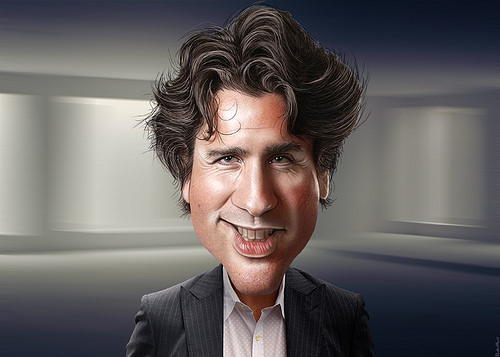
Justin Trudea caricature

In the Canadian Federal election last week, the Liberal party regained power, with a surprisingly strong majority government. The election campaign was long, and once again, strategic voting had a lot of news coverage. It was particularly apparent in my riding of Vancouver Granville, with two different parties using it as one of their primary tactics to convince me to vote for them.

In theory, strategic voting makes sense. In practice, in my riding, I’d call it a total failure.

The problem

To understand the basis of strategic voting, you have to look at election history.

In Canada, there are three main parties, the Conservatives on the right, the Liberals on the center-left, and the NDP on the left. Historically, the NDP has been the weakest of the parties, so the Liberals and Conservatives alternated rule for decades. In fact, in the 20th century, every Liberal party leader was Prime Minister.

In the early part of this century, a sponsorship scandal came to light, where the Liberals were providing inflated advertising agency commissions to their supporters. This, combined with rapid turnover in leaders, hurt the Liberal party. The NDP had a charismatic leader that enabled them to take advantage of the situation, leading to their best election results ever.

However, the main beneficiary of the Liberals’ downfall wasn’t the NDP, but the Conservative party. Though they never even reached 40% of the popular vote, they formed three consecutive governments. Many people theorized that, with the Liberals weakened, the left wing vote split between the NDP, the Liberals, and the Green party. This enabled the Conservatives to win elections simply because, though right-wing supporters were a minority, their vote wasn’t split between three parties.

What’s an unhappy electorate to do?

Of course, this outcome frustrated people. Almost certainly, a majority of the population would prefer one of the left wing governments. But, because of the first-past-the-post electoral system, the right wing candidates would win, gathering barely more than a third of the votes, but more than any other candidate.

What made it worse was that, among the left, the Conservative Prime Minister, Stephen Harper, was reviled. To them, his policies and arrogance personified everything wrong with a right-wing government.

Thus, strategic voting was born. The idea is simple. Instead of voting for your preferred candidate, pay attention to the polls, and then vote for the candidate who is most likely to defeat the Conservative candidate. By doing so, the left wing vote would no longer be split, enabling NDP and Liberal candidates to defeat the Conservatives in many ridings.

In practice

Strategic voting relies on the premise that anyone who didn’t vote Conservative would prefer any non-Conservative candidate to the Conservative candidate. I don’t think this would always be true, but, considering the extent to which people seem to loathe Stephen Harper, I imagine it was true for the 2015 election. Thus, in theory, strategic voting should work.

In practice, in my riding, it didn’t. Both the Liberal and NDP parties claimed that polls showed that they were ahead, and the only chance of defeating the dreaded Conservatives. In essence, they were splitting the vote with their own stories.

This makes sense for them of course. They want to be elected, so need to jump on the narrative that will help them achieve that goal. It’s not their job to ensure that they’re providing accurate information to strategic voters.

But this is unfortunate, because it obfuscates the issue, potentially confusing voters.

The Internet to the rescue

To deal with this problem, an organization called Leadnow was created. Their stated goal was to analyse polling results and do their own polling to determine the candidate most likely to defeat the Conservatives, so that left wing voters could vote en-masse for them. To me, this is a great idea, providing accurate information for everyone who believes in strategic voting.

But in practice, it didn’t work in my riding.

At the time, the numbers left little doubt. One poll gave the Liberals a 35% to 33% advantage. Another, a 44% to 28% advantage. There wasn’t a single recent poll that had shown the NDP ahead and all over the country, polls had been swinging in the Liberals’ favor.

But instead of recommending the Liberals who clearly had a better chance of winning, Leadnow recommended the NDP candidate.

They justified this decision in a fairly crazy way. They claimed that their polling results were within the statistical margin of error (i.e. the poll says the Liberal is ahead, but there’s a possibility that it’s wrong). Then, since the poll could be wrong, they said that the majority of the “Leadnow community” preferred the NDP, so voters should vote for them.

The thing is, the local director of Leadnow is friends with the NDP candidate. To me, as an outsider with no direct knowledge of what actually transpired, it looks like they basically said, “our recommendation might make a difference. What justification can we come up with to recommend the NDP candidate? Are there any statistics that fit that goal?”

The way I see it, instead of staying true to their mission of consolidating the left-wing vote, they did the exact opposite. They deliberately split the vote in an effort to get their preferred candidate elected.

The result

In the end, it didn’t matter. The Liberal candidate won with 44% of the vote versus 27% for the Leadnow-recommended NDP candidate. But to me, this is a massive failure of strategic voting. In one of the key ridings where strategic voting could have mattered, an organization designed to reduce vote-splitting cast aside its mission simply to promote a politician it liked.

I don’t think that this is the end of strategic voting–the idea makes too much sense for someone who wants to vote against someone rather than for someone. However, it is a clear warning against blindly giving away your vote to an organization that claims it can cut through the noise and figure out the right strategic voting choice for you. Instead, spend the half hour to do the research yourself, and decide which candidate actually has the best chance of achieving your goal.

My Latest Obsession: Skins

The main characters in the UK version of Skins

My wife and I been watching the UK TV show Skins on Netflix (it also seems like a bunch of episodes are available on YouTube). We’re partway through the second season and are loving it.

The story revolves around a group of teenagers in Bristol England who are going through Sixth Form (which I interpret as the last couple years of high school). Most of the action isn’t related to school however, but rather the things that happen outside.

Almost all the characters are messed up in their own unique way, and that’s a great thing. Every character is interesting for different reasons, to the extent that I find myself constantly saying, “I really love this guy. I hope they show more of him” pretty well every time a character appears onscreen. I don’t think I’ve seen a show where that’s the case as much as it is with Skins.

The diverse characters provide the perfect canvas for the show to explore a variety of issues such as drug use, mental illness, sexuality, neglect, obsession, infidelity, and death, in a direct, no-holds-barred way. The show is often dark–it’s not at all appropriate for children. But it is also very humorous, with occasional episodes that may deal with a serious issue but in a bizarre hilarious way.

Skins is a teenage drama, and as such there’s the risk of it devolving into a soap opera. It comes close to that line at some points, but doesn’t cross it. The thing that saves it is that it’s rarely about sensationalist gawking, but rather always about the exploration of the human condition.

The only time that the show suffers is when it goes completely over the top. There are times where it is just creepy, and not with a “good shivers” vibe, but rather a disturbing “you really didn’t have to go there and this adds nothing” sort of way. It packs the hardest punch not when the plotlines are extreme, but darkly realistic.

Overall, I’d recommend this show to any adult who’s a fan of gritty character-driven dramas.

Why Buy a Video Game on Day 1?

These guys are deriving social value from this game

Watching my son buy video games is interesting. He’ll follow a game for months before it is released, seeking out advertisements, watching videos, reading about the beta releases, and looking for any scrap of news. When the game is released, he’ll buy it on the first few days. Then, he’ll play it for a few weeks or a month, then go on to the next game.

What I find strange

I find this bizarre for several reasons. First, it looks to me like he’s spending far more time anticipating the game than actually playing it. This seems unusual, because the fun part of a game is supposed to be the playing of the game, not the anticipation of it. You never really hear someone say, “I can’t wait until they start putting out previews of the next Elder Scrolls game.” They talk about wanting to play the next game.

Of course, there are other things in life for which the anticipation lasts longer than the experience itself–movies and novels come to mind. Ask any Star Wars fan…. For decades, they anticipated a movie that was over in couple hours. A George R.R. Martin novel might take close to a decade to write, but only a few days to read. Nevertheless, I find a game different, because I think the experience of playing the game is supposed to last for much longer and because I see my son spend so much time following the game pre-release.

The cost

The other thing that’s odd is that, economically, it makes much more sense to wait for a year to purchase the game. There is huge deflation in video game prices. A game that costs $70 on opening day might be half that a year later, and sub-$10 a year after that. A brand new game might look slightly better because it will use better technology, but most of the interesting part of the game isn’t the graphics, but rather the game play. A great game is almost always fun to play even a decade later.

What’s more, there are many games that look amazing in previews, but turn out to be rather bad. If you buy the day the game is released, you won’t know for sure whether the game is worth even your time, let alone $70.

So, economically, instead of buying the best game today, it makes sense for my son to look at the best games that are three years old. Enough time has passed to know which games are great and which are lemons, and the price could easily be 90% off.

Why he does it

So is my son acting completely illogical in his obsession for new games? I actually don’t think so, because the value he gets from the game is far greater than the value he gets from playing it.

You see, when a new game is coming out, he will spend a huge amount of time talking with his friends about it. In essence, before and just after it comes out, the game might make up 50% of the topics of conversation. If he’s watched the marketing videos and played the game, then he’ll be able to contribute meaningfully in those discussions. If it’s a multiplayer game, he’ll be able to play with his friends and talk about strategies.

By being in the loop about the game, his social value among his friend will rise. So, in essence, the value that he’s getting from the games isn’t so much the enjoyment of the game, but the social benefits he derives from the game. Who cares if Skyrim remains one of the best RPGs ever, if none of his friends want to talk about it because it’s several years old? The game itself is still fun, but there’s no social capital to be gained.

And this is why it’s critical to get the game on day 1 of release rather than delaying three years–the social advantages on the first day are worth far more than the $60 he’d save by waiting.

When I was a kid

I don’t know for sure if this is what’s happening, but it seems to fit my observations. I suspect that for kids and young adults, this is a huge proportion of the value of games, while for older adults, it is far less important. (Older adults will still buy the game on opening day, but I think a big part of that is that $70 is far less significant to them than it is younger people, so the value proposition doesn’t need to be as high.)

It’s certainly true that video gaming is a vastly different activity for children than when I was growing up in the 1980s. Back then, there was some social value from games, but not nearly as much as there is now. I’d play a game for a year if it was fun, regardless of what my friends were playing. Now the social element is hugely important.

I suspect this evolution came about because of the Internet, the rise of distributed multiplayer games, and the massive growth of video game marketing budgets.

The Core Ideas Behind Value Investing

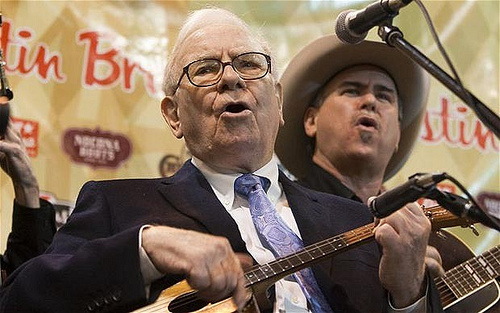
Warren Buffett on the Ukulele

When it comes to stocks, I tend to be a value investor–an investor who looks to buy shares in a company for less than they’re worth. The reasoning is, if you buy something for less than it’s worth, then there’s a good chance that at some point in the future, someone will want to buy it from you for more than it’s worth, and you can make a profit.

I use this method because it’s the only way to invest that seems to be based on logic and reason. Other people bet on momentum (i.e. this stock is going up. Therefore if I buy it today it will keep going up and I will get rich), but I’m uncomfortable doing anything that isn’t reasonably grounded in logic.

That’s fine to say of course. But how do you determine what a stock is worth?

Think like a businessperson

Suppose that I owned a lemonade stand that made $10,000 profit every year. Would you buy it from me for $10,000? Probably, right? Because it would only take you a year to earn back your money.

On the other hand, suppose that I wanted $1,000,000 for it. In that case, you probably wouldn’t want to buy it, because it would take you 100 years to pay it off. You’d be getting a 1% return on your capital. You could do better just buying government bonds without taking on any business risk at all.

(Well, with one exception. Suppose that the lemonade stand is planted in Times Square and owns the land it’s on, land worth $3 million dollars. Then you’d want to buy it for a million. You could just shut down the company, sell the land, and triple your money.)

So, as an operating business, the value of that lemonade stand is probably between $10,000 and $1,000,000.

Return on your capital

But that’s a huge range. To narrow it down, you need to start thinking about what other potential investments are yielding. Suppose that a safe, 30-year government bond is yielding 5%. The lemonade stand should yield more than that, because an operating business is much riskier than buying a government bond.

Perhaps the price of lemons will skyrocket, and you won’t be able to make a profit anymore. Or perhaps a hurricane will flood your business, and you’ll have to spend huge amounts of money to get it running again. Or perhaps your customers might decide they like coconut water more than lemonade. So many things can go wrong. You really need to make significantly more than a government bond.

So perhaps you might say, “it’s only worth it to me to take that risk if I get at least a 20% return on my capital.” Well, then you’ve valued the business. To get a 20% return on your capital, you’ll need to pay $50,000 or less for that business. Now you’ve got a valuation.

Grow or die

Of course, most business aren’t static. Typically, they try to grow. My lemonade stand could establish a brand and try to open three or four more lemonade stands around the city. In that case, the profit today could be much less than the profit in a few years.

If you’re confident your business will grow, you can pay quite a bit more than the $50,000 today. For instance, if I think the lemonade stand will make $10,000 the first year, $20,000 the second, and $40,000 the third, then in three years I will have made $70,000. To get a 20% return on my capital each year, I could pay almost $100,000–a 20% return each year means that after three years, my money needs to increase by 72.8%, since 1.23=1.728, and $70,000/0.728=$96,0000.

So, I’m willing to pay quite a bit more for the lemonade stand if it’s growing rapidly.

The problem with growth

And this is where one of the big challenges with investing rears its ugly head. Growth estimates have a huge impact on the value of the business. This is why you sometimes have stock fall huge amounts simply because they missed their earnings estimates by a penny. If the miss causes people to think that they won’t grow at pace they expected, then the business is worth far less.

But how the heck do you know whether or not, 3 years down the road, the business will actually make $40,000? You can be sure that the guy selling it will claim that it will. But how do you know?

You don’t. You have to just make your best guess.

Buffett’s innovation

And this is where Warren Buffett comes in. He says that the game is actually a bit different than we were led to believe. Valuing the business is important, but even more important, over the long term, is the predictability of the business.

A business that you are very confident will grow at 20% a year for two decades is much more valuable than a business that grew at 40% last year, but you have no idea how much it will grow–or even whether it will still be in business–in the next five years.

Often, the market doesn’t see that. It doesn’t fully take into account the sustainability and growth of great businesses. Coke is extremely unlikely to disappear from the planet in the next decade, and, without some colossal mismanagement, is likely to be one of the top soft drinks 50 years from now. If Coke was earning $10,000 a year, I’d pay far more for Coke than our lemonade stand because it’s so predictable.

And that’s how Buffett got rich–by buying businesses with highly sustainable growth for less than they’re worth.

The bottom line

Valuing any business is basically the same as valuing our lemonade stand. The only real differences are that publicly traded companies are much bigger and more complex, and you don’t buy the whole business, but rather just a portion of it (e.g. f the company has 10,000 shares outstanding and you buy a share in it, you’re buying one ten-thousandth of the business.). If you get good at valuation and determining the sustainability of businesses, this is a reasonably good way to get rich.

Grading Teachers

An elderly teacher

I blogged recently about how teachers have a huge amount of influence over the outcomes of our children. Because of this leverage, we should take steps to ensure we have the best teachers, the ones who lead to the best outcomes. One of the comments on that post asked how we would actually evaluate teachers, taking into account both social inequalities and influences on the “whole child”.

These are reasonable questions. Children in richer neighborhoods often have better test results and overall outcomes than children from poorer neighborhoods, and school is about more than just test scores. So, how to do you ensure each school offers roughly the same opportunities and how do you evaluate the performance of teachers?

Dealing with inequalities

To deal with inequalities, we can start by eliminating private schools. Or rather, you can have private schools, but not ones that operate during school hours. Every child goes to public school. Rich people who would prefer something else can further educate their kids after school hours. By doing this, I expect it will increase the incentives for public school funding.

Second, any donations or fund-raising for any school should be “taxed” 50%. In other words, the school will get 50% of the income, but the rest is returned to the school district to be redistributed to other schools. Thus, a school in a wealthy area will still be better than a school in a poor area, but the inequality will fall. I think a strategy like this is a reasonable way to ensure a reasonable trade-off to encouraging fundraising without creating an extremely skewed education system.

Ask the experts

Almost every teacher at higher grades evaluates their students through testing. Thus, they clearly believe that testing is a reasonable way to evaluate students’ abilities, so should have no problem with tests being used to evaluate their abilities. What’s more, because of all the testing they do, one could argue that teachers are the experts at creating tests to evaluate people’s performance.

Thus, a simple (though maybe a bit cynical) way to grade teachers is to ask them to come up with a way to grade themselves, to distinguish the best teachers from the worst teachers. First, they would have to determine the important things they should be teaching, and then how to evaluate whether the students are learning those concepts well.

If they come up with a system where every teacher gets an A+ grade, then they will have proven that they are unable to evaluate someone’s performance. But I view this as the most core component of being a teacher. If you can’t even determine how someone is performing, you can’t know on which areas you should focus your teaching. At best, that means you’ll be a grossly inefficient teacher and at worst completely useless. If you’re that ineffective, you should find another job.

Standardized grading

If people are reluctant to allow teachers to set up their own grading system for themselves, then I’d suggest creating a standardized grading system.

With a committee involving teachers, administrators, and parents, come up with a list of what we hope to achieve in each grade. Then, create a huge database of questions related to each topic. Have a bunch of kids in each grade answer the questions so that you have a rough idea of how difficult each question is. Then, build random adaptive online tests that use a small subset of the questions.

By adaptive, I mean giving easier questions when the student gets the question wrong, and harder questions when the student gets the question right. By having the questions randomized, you minimize the chance for teachers to cheat, such as by giving the students the answers to the questions in advance. They’ll still be able to focus on the topics that will be on the test, but, since the test evaluates the dimensions we care about, that doesn’t seem like a bad thing.

In this way, in a relatively small number of questions, you’ll be able to evaluate the student’s abilities in various topics. At the beginning of the year, give the students the test, and then give them another test at the end of the year. The difference between the results is the impact of that year of school, which, in aggregate, should largely be the effect of the teacher.

But what about….

Of course, there could be the temptation for teachers to encourage their kids to sandbag the beginning of the year test so that they have a low hurdle. However, if this is occurring, it should be relatively obvious by comparing year over year results. (“That’s odd. Every one of Ms. Bingly’s students lost 80% of their knowledge over the summer, while everyone else’s students only lost 25%. And this has happened for 3 years straight.”)

Of course, teaching has a human component. So what do you do to ensure that teachers who have a good “soft side” get rewarded?

Nothing. If it’s important, it should be on the tests. If the teacher is actually abusive, then they shouldn’t be teaching anyway, regardless of test scores. Otherwise, put in the test…

The bottom line

I don’t imagine this strategy would be perfect, and it may be completely wrong. But teaching is about evaluating gaps in knowledge and skills, and filling in those gaps. If we believe that teachers are able to evaluate students at all (and I would find it hard to believe many people truly think most teachers can’t do this), then you also ought to be able to use similar evaluation techniques to judge the performance of teachers.